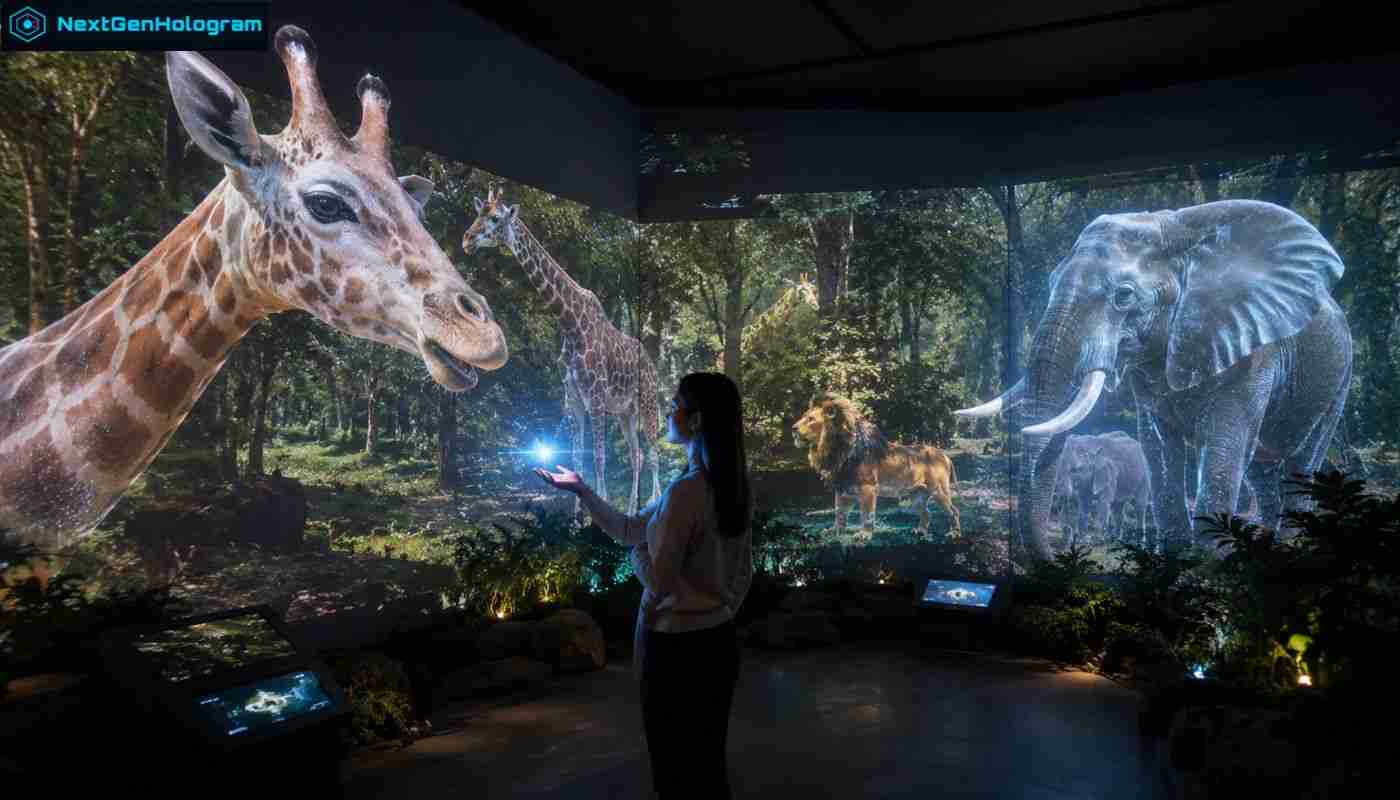
A 3D hologram zoo experience is starting to redefine how wildlife parks educate and amuse visitors. They mix storytelling, science, and newer technology into one immersive room that feels alive. Rather than leaning on physical enclosures and static signage only, parks are now using 3D-style holographic displays to show endangered species, prehistoric animals, and even underwater ecosystems that are too fragile, too rare, or just plain gone to be kept in captivity. This hologram-based zoo approach boosts conservation messaging, increases guest involvement, and backs STEM curiosity for families as well as school groups.
What Is an Interactive 3D Hologram Zoo?
An interactive 3D hologram zoo is a digitally boosted wildlife exhibit where 3D-like animals appear to move and respond in front of visitors. These displays are often cabinet-style or pyramid-enclosed hologram machines that throw life-sized or smaller-scale creatures such as lions, dolphins, or dinosaurs against believable backdrops.
Visitors can:
-
Walk around the exhibit a little, just so you can see the animal from different angles, even if you end up back in the same spot.
-
Use touch panels or motion sensor kiosks to trigger those simple animations, plus a few quick facts that pop up when people interact.
-
Then take a moment to watch the looping narratives; they help explain habitat loss, predators, or migration patterns in a way that feels steady instead of rushed.
-
This kind of exhibit works well in wildlife parks, nature centres, and science museums that aim to balance real-life animal care with richer digital storytelling.
Role of the 3D Hologram Zoo in Wildlife Education
A 3D hologram zoo has a few clear educational goals, like
-
Conservation awareness: It shows endangered species, or even extinct ones, and the habitats that are vanishing around them.
-
Behavioral insight: Animated 3D models show how animals hunt, communicate, or migrate, in ways that are difficult to notice in a small enclosure.
-
Accessibility: Parks can show creatures from faraway continents or deep-sea environments without needing live animal transport.
For example, a hologram aquarium can somehow simulate coral reefs and deep‑sea predators in vivid 3D, while helping visitors wrap their heads around ocean ecosystems that are fragile and, honestly, tricky to see in real life.
3D Hologram Aquarium, plus Underwater Zones
Many wildlife parks are adding hologram aquarium zones to show marine life without the big tanks or complicated filtration systems. A 3D Hologram zoo corner, focused on underwater life, can:
-
Show schooling fish, sharks, and whales in a 3D-style setting.
-
Bring layered effects through text or voice, like climate change, microplastics, or harm to coral reefs.
-
Run short missions or quizzes that make kids choose the correct conservation action.
This kind of setup is really helpful for smaller to medium-sized parks that want a large-looking marine zone, without the price and ongoing care of a full-size aquatic facility.
Technology Behind the Hologram Zoo Experience
Interactive 3D hologram zoo solutions usually mix together:
-
A hologram apparatus or volumetric display that throws the 3D model using reflected or diffused light, not in a flat way.
-
A hologram video projector, or an LED array that builds high‑frame‑rate animations from behind a transparent screen, so it stays readable even when people move.
-
A motion‑sensor or touch‑based interactivity layer that lets guests “call up” different species and scenes, like an unseen handler.
Content is often made from 3D animations, scientific reconstructions, or real‑footage hybrids. So the behavior feels realistic, educational, and a bit uncanny in a good way.
Visitor Experience and Park Benefits
For guests, a 3D Hologram zoo display:
-
Feels more wow‑ish and more social-media-friendly than a traditional exhibit. It also pulls people in for longer pauses.
-
Helps spark parent‑child talks and repeated viewing without feeling repetitive.
-
Allows multi‑language narration, or QR‑code linked explanations for travelers.
For parks, the main upside includes:
-
Less stress on live‑animal habitats, because some species can exist as virtual‑only displays.
-
Updates that stay flexible, like you can refresh the exhibit content again and again without needing to rebuild the physical enclosures, every single time.
-
A stronger branding angle as a modern, environmentally aware, tech-driven destination, where the experience feels current.
Conclusion
As 3D Hologram zoo technologies mature and become more affordable, interactive holographic wildlife displays are shifting from premium add-ons to core attractions inside parks. When parks weave 3D Hologram zoo experiences together with AR-linked overlays, plus real-time wildlife data, then you get environments that feel more immersive, teach more clearly, and are tied to conservation goals. Visitors keep coming back year after year, because it feels alive and updated.