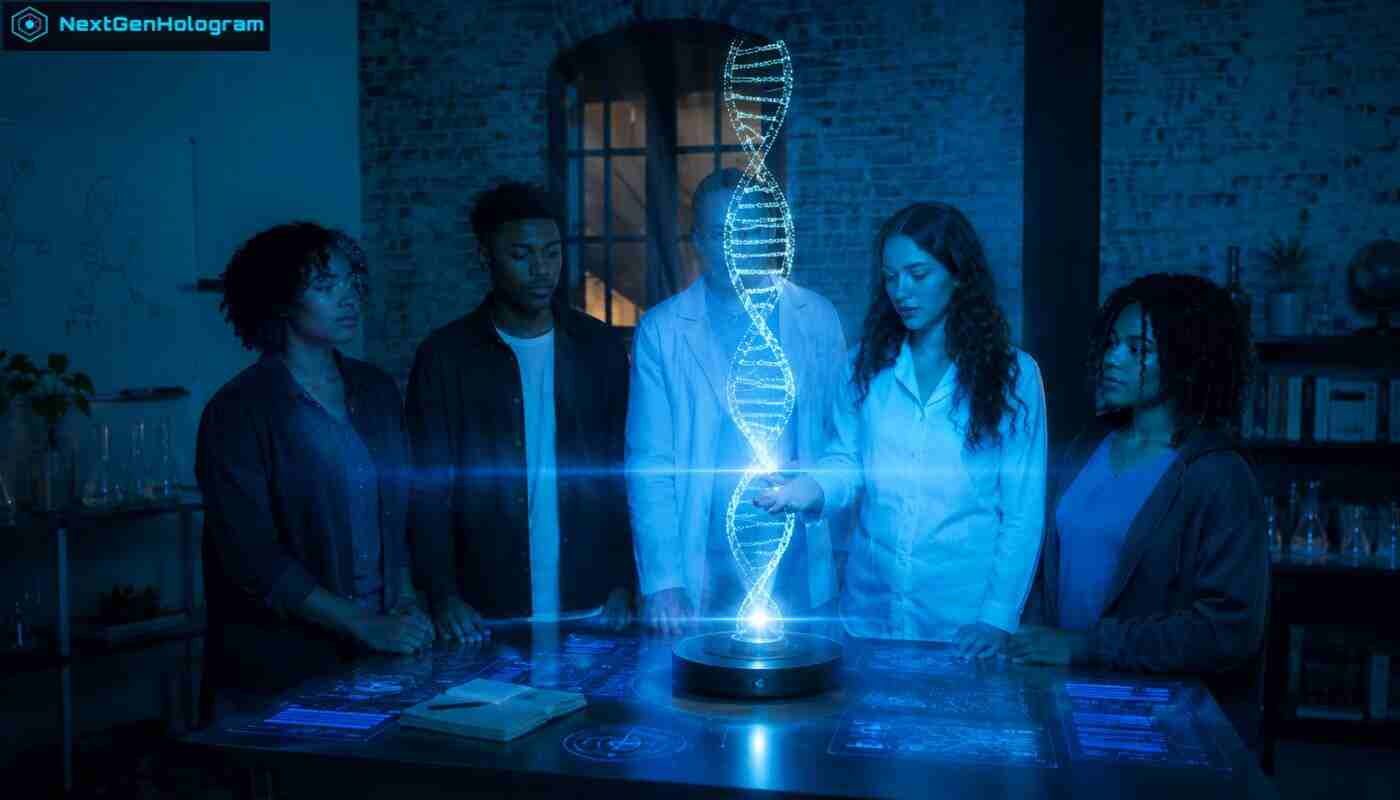
Learning with interactive holograms and understanding complex topics and concepts in 3D holo pictures is bringing a revolution in education for students. Virtual classrooms through 3D visuals attract several students and provide them with excellent knowledge about difficult subjects. Nowadays, they can attain immersive and engaging experiences through 3D hologram in education and are incorporated by Science, Technology, Engineering, and Mathematics educators. Know the best use cases and features of the 3D hologram science project and others, as detailed in this article.
About the 3D Hologram Technology
A technology where light beams create 3D pictures sailing in mid-air is recognized as 3D hologram technology. These 3D visuals can affect multiple sectors like retail, healthcare, education, defense, etc., for profound operations, planning, designing, learning, diagnosis, and advertising. 3D Hologram in education captures light from an object and creates three-dimensional images with the help of optical science that can be observed without headsets and from several angles.
Holograms Creating Interesting Educational Atmospheres
Students remain inactive in the classroom and don’t even respond when something is discussed and questioned by them. This hits smartly what we are expecting from them. Now, think of a place where you need to offer courses and teaching. It’s everything about connection and offering possibilities to the Gen Z generation.
3D holographic devices have multiple components, including language pedagogy and conservation, oral history, and design presentations, and operating with young people to design holographic pictures for learning complex topics. These 3D pictures in education are filling the space between teachers and learners. A HoloPresence unit blended with a microphone, camera, and soundbar can immerse a person in the classroom. Convenient to connect with students sitting in Ottawa, Canada, from a New York classroom through tactical components like an earpiece, camera, mic, and a monitor displaying a learning board with a teacher. That’s why holograms leave an endless effect on students compared to traditional classes.
Immersive Virtual Atmospheres
Multiple institutes provide a virtual atmosphere for learning purposes through engaging the 3D hologram explanation, where several students prepare and practice English speaking skills to get employment. With the help of 3D VR displays, students can learn and visualize complex structures of science models or any mathematical concept without headsets from multiple angles. 3D duplication of classrooms with advanced holographic technology enables students to connect with their learning courses remotely, where they can rotate, manipulate, zoom, and understand three-dimensional images of difficult topics.
Augmented Reality in Education - Offering Real and Virtual Connectivity
Augmented Reality is propelling the educational atmosphere by blending the physical environment with virtual content. With AR-based tools like smartphones or tablets, learners can engage with online content via holograms to understand situations and activities happening across the globe. Augmented Reality offers access to multiple opportunities in the education sector. Students can begin their virtual tour to distant destinations, explore the solar system without leaving their classrooms, and analyse the facts in historical sites and artworks. These virtual trips provide engaging and immersive experiences to students that traditional explanations can’t.
Turning Classrooms into Future Learning
The association of AR technology and holographic devices is reproducing the dynamic education into captivating, seamless, and smart classes offering immersive learning to students that associate interest and facilitate creativity. Strapped with the power of innovative holographic tools, the barriers of learning can be taken further, unveiling new opportunities for surfing, searching, and interaction.
So, Augmented Reality and holographic devices demonstrate the future of learning. This delivers equivalent opportunities to learners and students to reimagine the educational experience in interesting ways. You can enable the next generation of educators to think seriously and catch unlimited opportunities via interactive holographic technology. To know more about the 3D hologram in education, get in touch with the Next Gen Hologram customer care number.
FAQs
Ques. What has been changed by hologram in education?
Ans. With the latest development in hologram technology, students can get an immersive experience and understanding with 3D visualization of complicated topics in any specific subject. They can learn, manipulate, rotate, zoom, acknowledge, and view 3D views without headsets.
Ques. What are the key advantages of holographic technology in the educational sector?
Ans. The essential benefits that can be generated through 3D holograms are enhanced interaction, associative visualization, no specific device, and remote and guest teachers for learning complex topics.