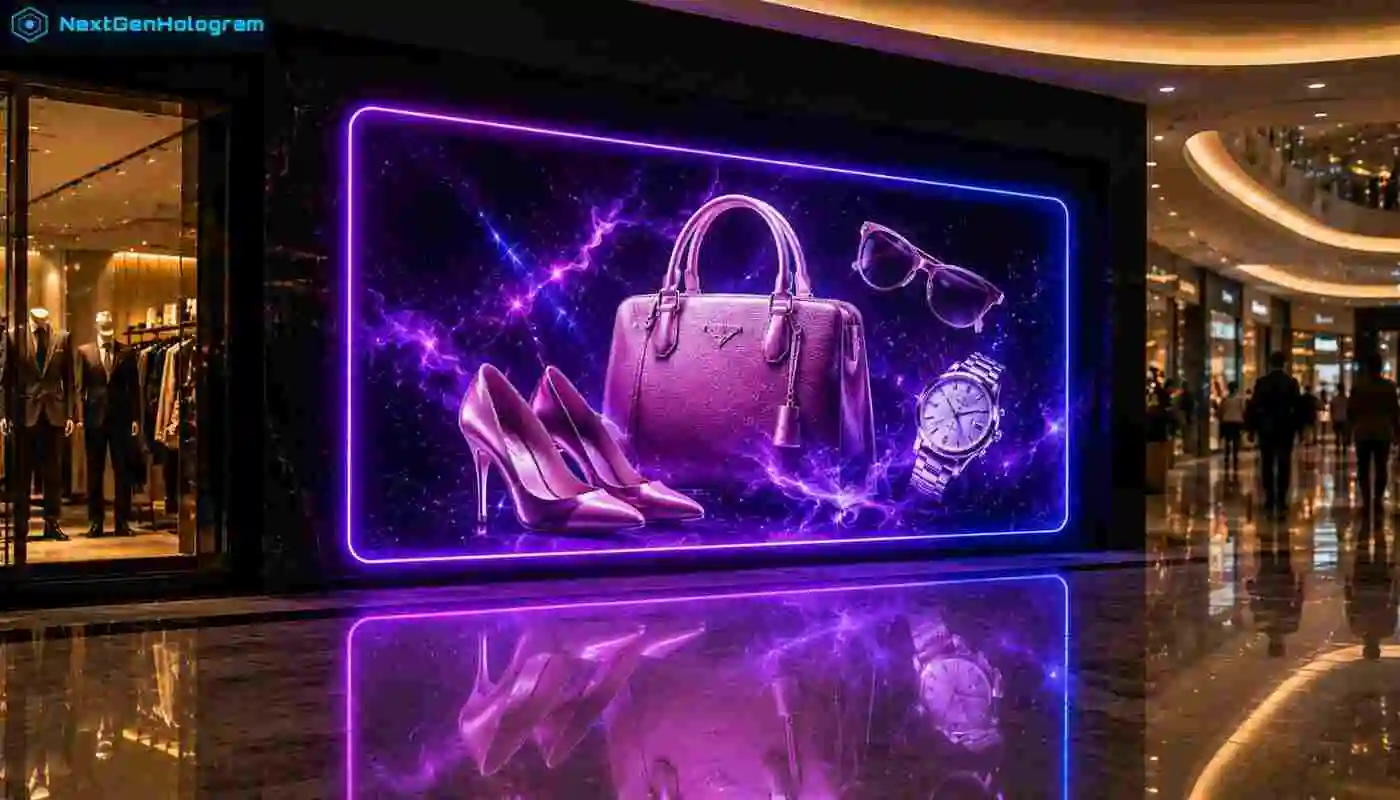
Events, exhibitions, and smart experience centres are undergoing rapid change – people aren't just looking for static displays; they want an immersive and memorable experience. The 3D hologram wall provides precisely that: a headline-grabbing, photorealistic surface that is going to help turn any venue into an experiential stage. A 3D hologram projector interactive display wall can make an impact, whether for product launches, brand activations, or wayfinding. From product launches to brand activations to interactive wayfinding, a well-designed display wall powered by a 3D hologram projector makes an impact and can be measured.
Why Choose a 3D Hologram Wall?
A 3D hologram wall is a fusion of scale, motion, and depth to deliver content in a format other than in 2D on a screen. The visitor is drawn across a hall to this display wall, whereas with flat panels, we are able to draw his attention only within the vicinity of the panel. That increased attention equates to greater brand recall and better conversion possibilities during live events for marketers and experience designers.
Key technologies: laser hologram projector and 3D hologram projector
There are two main types of projectors that are commonly implemented in holographic installations today: The 3D hologram projector utilizes state-of-the-art light field and projection mapping technology in order to provide users with high-resolution 3D holograms and presentations that are incredibly vibrant and bright.
A laser hologram projector works well in large arenas and outdoor environments where bright, crisp images need to be displayed with high lumen output, and high contrast is needed in order to compensate for surrounding lighting conditions. When choosing between the two types of projectors, you have to consider the size of the room or space, the amount of ambient light present in the room, the distance to the viewer, and the nature of the content being displayed.
Designing an Effective Display Wall
The key to good holographic experiences is content that is driven by the story. Create content that makes use of parallax, depth cues, and movement to make the most of the floating effect of the 3D hologram wall. Limit scenes to 10–40 second loops, which work well in busy scenes. When used with live filmed material, CGI will contribute to its realism. And ensure that content is produced at the resolution of the projector so it doesn't scale with artifacts.
Installation and Practical Considerations
-
Site survey: Determine required levels of sightlines, ambient light, and power, in order to ascertain the correct system comprising the projector & screen.
-
Mounting and structure: Easy, quick & safe installation of the modular frame system to be utilized for shows & exhibitions.
-
When complemented by the laser hologram projector setup, use lighting (if available) and blackback draping. Blackback draping will be more effective in low ambient light conditions, whereas the laser hologram projector setup can cope with more ambient light.
-
Directional sound: Employ directional sound or local sound effects in order to achieve viewer immersion and to ensure the exhibit is not overwhelming compared to others surrounding it.
-
Interactivity: Using gesture tracking, NFC, or QR triggers, the display wall can become interactive and an opportunity to obtain on-the-ground engagement data.
Use Cases That Perform Well
-
Product launches: Show 3D models that spin, zoom, and reveal features without needing a physical product or anything like that. Let people grab shareable holographic photo moments and then tell those little brand stories with activations, you know, the fun ones.
-
Retail Pop-Ups: Use hologram advertising so rotating product lines get attention, plus time-limited promotions that feel kind of urgent.
-
Education centres, Museums: Create holograms of full-size scenes from history or anatomy, so it feels almost tactile even if it’s not.
-
Experience centers and corporate lobbies: Share company stories, KPIs, and interactive timelines right on a high-end display wall. It’s advanced, and it looks impressive.
Measuring ROI
Track footfall, engagement events (scans, clicks, or gestures), dwell time, and measure impact. Measure reach and sentiment using on-site metrics, post-event surveys, and social analytics. When compared to the normal static advertising, the recall rate for hologram advertising can be much higher, particularly when accompanied by a clear call to action.
Maintenance and Content Lifecycle
Schedule and maintain projector health by cleaning and calibration. Rotate campaigns and leverage scenes that are templated for easy updates. To get the maximum return on your display wall investment, for recurring events and smart centers, develop a content calendar that follows product seasons, campaigns, and special dates.
Final words
The perfect 3D hologram projector or laser hologram projector will be able to revolutionize events, exhibitions, and smart experience centers in terms of creating a lasting impression. Not only does hologram advertising create visual interest, but it is also highly effective in terms of customer engagement and conversions when it comes to quantifiable action, smart use of space, and compelling storytelling. To know more about the 3D Hologram wall, get in touch with the NextGen Hologram customer care number.
FAQs
Ques. What is a 3D hologram wall?
Ans. Large-scale projection display that generates 3D content in volume, which appears to float.
Ques. How does a 3D hologram projector differ from normal projectors?
Ans. Uses special optics and mapping to produce volumetric images (rather than flat images) that give a sense of depth and parallax.
Ques. Is a laser hologram projector better for outdoor events?
Ans. Yes — laser units are brighter and contrastier and better suited to bright ambient lighting.
Ques. Can hologram advertising measure ROI?
Ans. Yes — use footfall, dwell time, interaction counts, and social data to measure campaign performance.