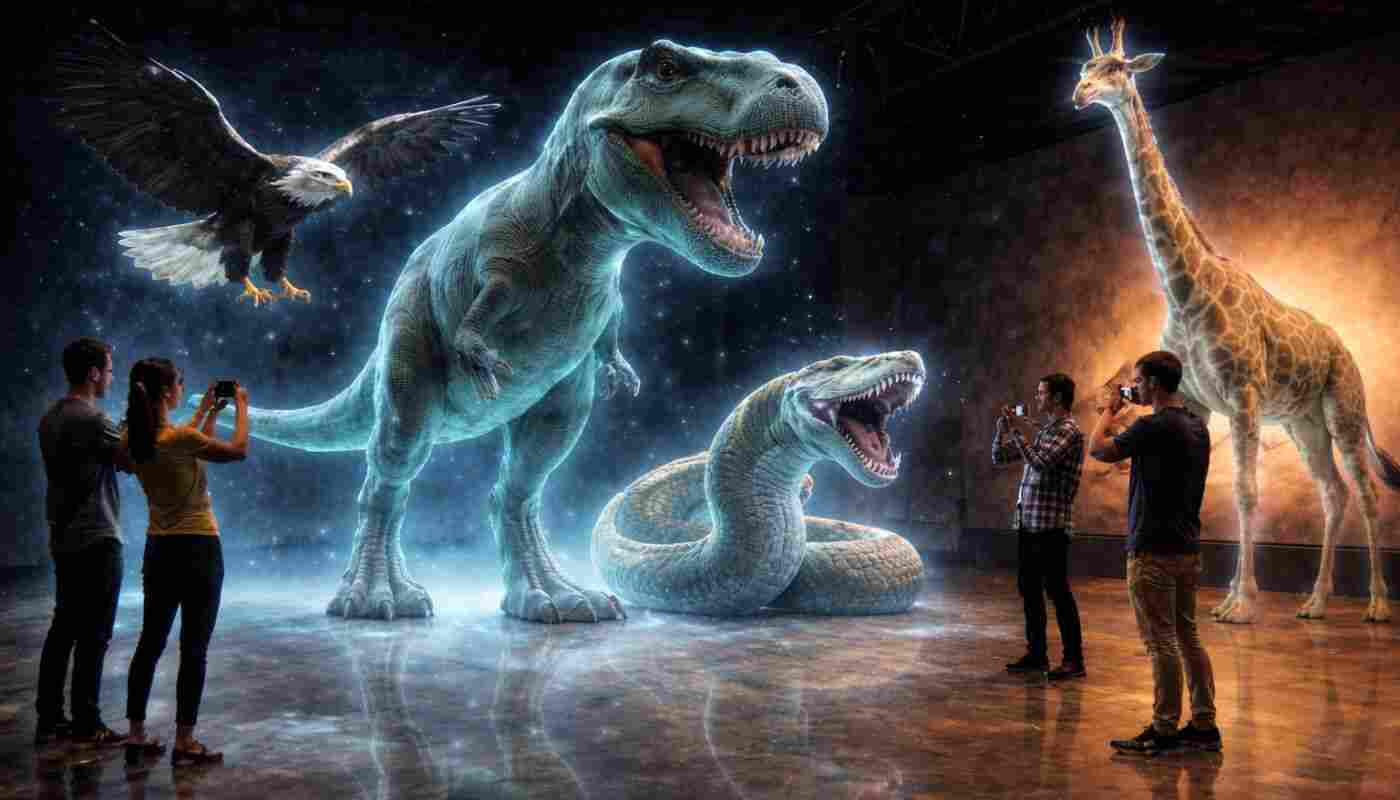
Museums are no longer dark rooms of treasures. They are the humming rooms of experience with 3D holograms in museums. Consider traveling to the past. 3D hologram images act as living artifacts suspended in the air and engaged by your spectacles. 3D hologram pictures and holographic projections are changing how people interact with the past. These inventions render learning memorable from the early times of Egypt to the present-day art. We shall explore seven ways in which the 3D hologram in museums is changing experiences.
1. Reviving Historical Figures with Lifelike Projections
Holographic images are invocations of the past. Cleopatra discusses pharaohs. Einstein discusses relativity. These 3D hologram images allow the visitor to chat and ask questions. They are answered through AI integration. There are no more lifeless statues. It is motion pictures that ignite interest.
2. Immersive Storytelling Through Hologram Pictures in 3D
Gone are flat displays. The 3D hologram images and hologram pictures in 3D are used to tell heroic stories. For example, Viking raids revisiting the air or dinosaur hunts coming into action. Multi-angle shots allow the crowds to roam around the exhibits. They encourage awe in the collective and stronger storytelling.
3. Hands-On Interaction Without Touching Artifacts
Touchscreens are obsolete. 3D hologram in museums allows gesture-controlled holographic projections. Wave to spin a virtual Ming vase or cut up a holographic mummy. This is a non-contact magic that keeps originals intact. It introduces fun in touch to everyone.
4. Personalized Learning Paths with Adaptive Holograms
The 3D hologram images are powered by AI. Children are shown simplified facts about dinosaurs. Professionals learn about quantum physics. The tickets are scanned, and the holograms get focused. This makes visits inclusive and increases repeat attendance.
5. Multi-Sensory Experiences via Hologram Projections.
Holographic displays are synchronized to sound, light, and smell. The metallic smell of a medieval forge is present as a blacksmith hologram is displayed. This multisensory combination increases the retention, transforming passive viewing into bright memories.
6. Collaborative Group Adventures in 3D Hologram Spaces
Co-pilot with holographic ships across ancient seas. Create virtual puzzles out of hologram pictures in 3D. These are some examples of things that groups do with holograms in museums. It is a well-claimed activity to engage families or school trips, as opposed to staring at holograms alone.
7. Augmented Reality Overlays for Deeper Insights
Create 3D hologram images and open AR apps on your phone. Scan with a camera on a hologram to reveal a second layer. Students see how a sculpture is made or learn about its cultural background. This is an amalgamation that makes museums the gateways to an infinity of discovery.
These are not tricks but the news. According to the industry reports, 3D holograms in museums have contributed to an increase in visitor numbers. Visitor numbers increased by 30-50 percent since hologram adoption. This makes education and entertainment in a museum more democratic than ever.
Final Words
The age of 3D holograms in museums has been ushered in. Hologram images in 3D and holographic images break barriers between past and present. These 3D hologram images cause fantasies. Each visit is a gateway to wonder. Learn. History lives. History talks. Make your next adventure an experience to remember. To know more about 3D Hologram in museums, get in touch with the Next Gen Hologram customer care number.
FAQs
1. What are 3D hologram images in museums?
Still images are brought to life using laser light and made to move in three dimensions, allowing the still images to look interactive and realistic.
2. How do holographic projections enhance visitor engagement?
They allow one to have real-time interaction, such as gesturing or voice commands, and make passive observation active.
3. Are hologram pictures in 3D safe for all ages?
Yes, non-contact and eye-safe, they are family-friendly and have an adjustable brightness for children and the elderly.
4. Which museums lead in 3D hologram technology?
Exhibitions such as the Natural History Museum (London) and Holoverse at tech-innovative museums around the world transform the world.