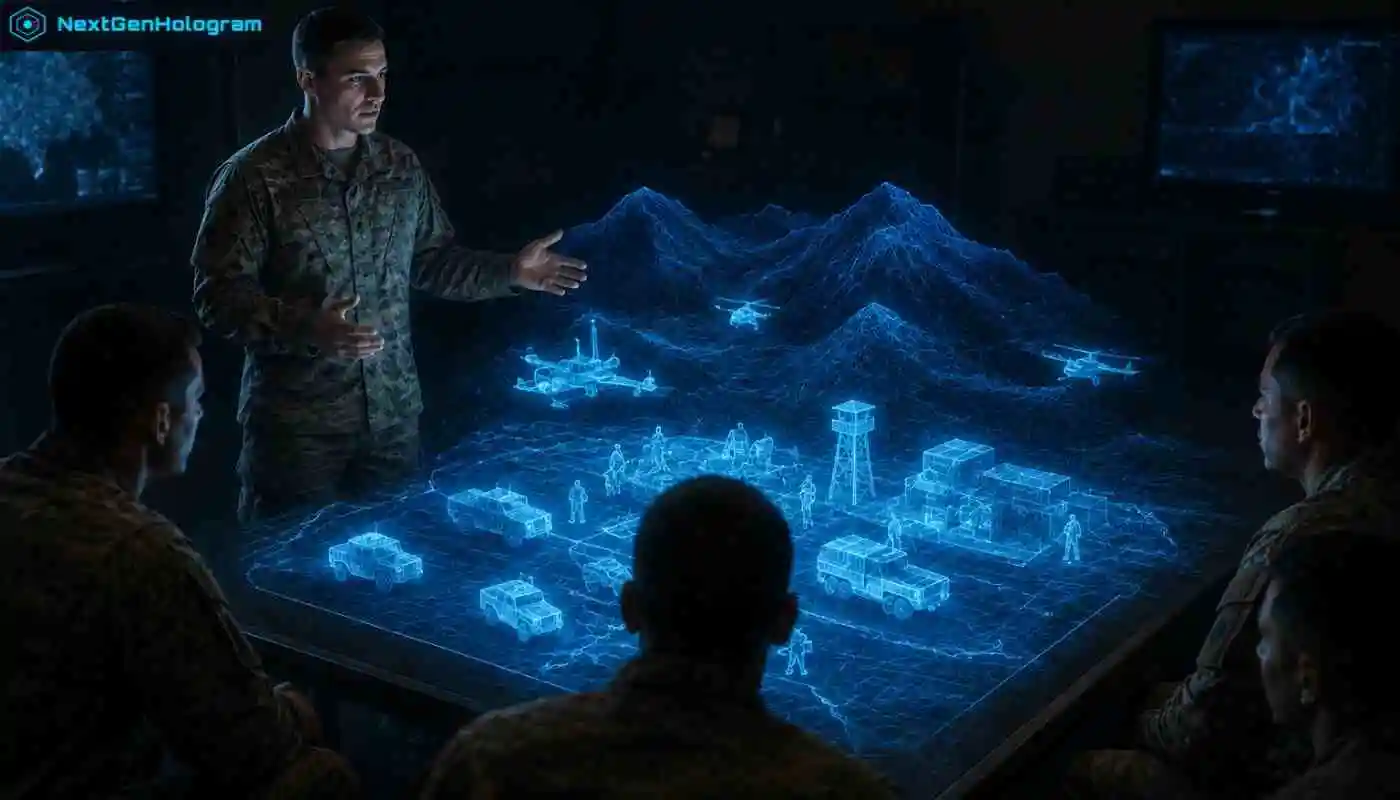
Imagine that your employees can learn the toughest of processes as they stand right by the machine, looking at a giant-sized version of the process, with no VR headset and no cluttered screen to distract them. The power of the 3D hologram training. In today's offices, the use of hologram-screen configurations and state-of-the-art hologram technology ensures a more entertaining, safer, and effective training process than a conventional slide show or video.
Why 3D Hologram Training Is Different
With 3D hologram training, students do not just see a video, but interact with the 3D effect, which can be seen from any angle, walked around, and even controlled during the training session. The realistic and detailed graphics help to enhance the understanding of space relationships, safety, and technical processes that accelerate the learning curve for the teams.
Research on immersive 3D learning has demonstrated greater job performance, attention, retention, and confidence in job performance—perfect for situations where skills are high and risk is high.
How Holographic Screen and Hologram Devices Work
Typically, a professional system is made of a holographic screen, a hologram device, content software, and interaction tools. The holographic screen serves as the “stage” on which life-sized 3D images of instructors or equipment or scenarios are displayed, which enables groups to see without headsets.
The hologram device can be a projector-based device or an integrated display that displays the 3D graphics and can be connected to sensors that track movement, simulate touch and other gestures, or be activated by voice commands. They are hands-off, make for interactive simulations and are as close to the real thing!
Where It Fits Best in the Workplace
When errors have significant consequences or there are limited opportunities to practice, 3D hologram training really comes into its own. Think:
-
Using virtual machines, trainees can “disassemble” them and have a safe look at the internal components in equipment maintenance and repair.
-
Using holographic simulations, teams can have a safe response practice without the risk.
-
Holographic presenters act out difficult situations/clasher conversations to practice soft skills and customer service.
-
Specific sectors, e.g., medicine, defense, aeronautics, where anatomy, tactics, or layout of cockpits are shown in a true 3D image to better understand.
Implementing It in a Marketing‑Friendly Way
Communicate this to its stakeholders, focusing on results: fewer hours in training, fewer mistakes on the ground, and a modern and tech-forward employer brand. Start with a pilot module, like a critical safety procedure or a key customer scenario, and show measurable gains – faster to competence, fewer errors, higher trainee satisfaction.
Make technology sound like it is the same, but more immersive and memorable: the hologram explanation is just what trainers are doing, but more immersive and memorable.
Final Words
Strategic upgrade: 3D hologram training is not a show-it, but a boost to workforce training. It helps deliver compelling training content at scale, as well as tangible outcomes and smart scenarios designed to future-proof training programs. To know more about 3D Hologram training, get in touch with the NextGen Hologram customer care number.
FAQs
Ques. What is 3D Hologram Training?
Ans. Training based on scenes rendered and projected as a life-sized 3D hologram for immersive, interactive training.
Ques. What is a Holographic Screen?
Ans. A surface that presents a 3-dimensional volume of data to groups of users who don't require VR headsets.
Ques. How does a hologram device work?
Ans. It displays or projects 3D content, and can be accompanied by sensors for user interaction via motion or voice.
Ques. Is 3D holographic training worth it?
Ans. Yes, it helps improve engagement, retention, and on-the-job performance with complex, hard-to-do skills or high-risk skills.