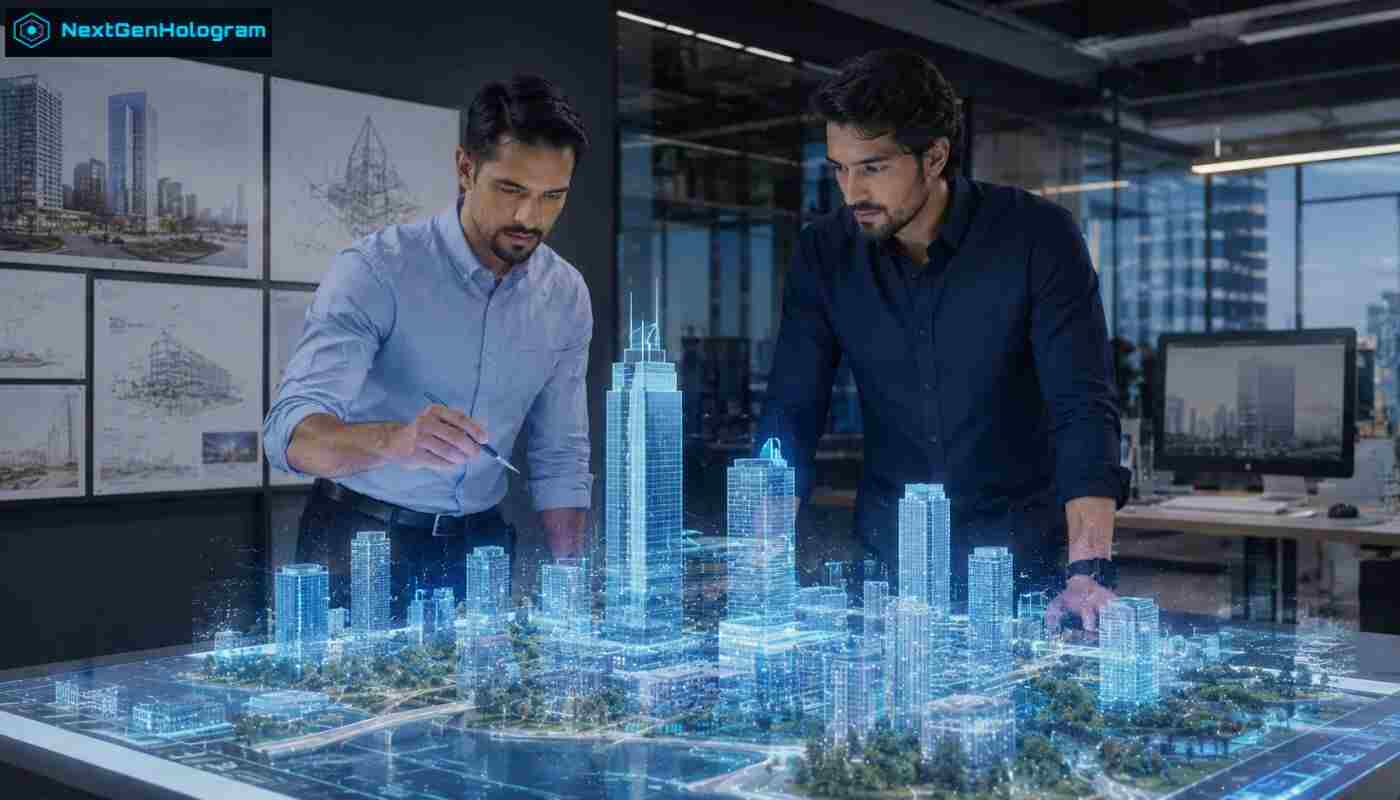
Holograms work in a unique way by providing lifelike 3D visuals and immersive experiences of planned real estate projects to customers. They enhance the architecture to project a captivating design for the building before construction. With the help of engaging visuals, audiences or buyers can imagine and plan their dream homes or commercial shops before investment for construction. A hologram in architecture provides associative designs of buildings and establishes interaction and collaboration between stakeholders and designers. This write-up assists you in understanding the major role of 3D hologram in architecture to design buildings in interactive and immersive patterns.
About the Hologram in Architecture
The hologram in architecture has transformed building reviews, architecture, and construction by displaying engaging, three-dimensional, and full-sized prototypes, removing conventional two-dimensional graphics. With holo rooms and tables, designers can move through architecture, optimize structural associations, and enhance collaboration. This hologram industry supports site evaluation, metro planning, and shaping associative and variable interiors.
What Challenges is Conventional Architectural Planning Facing?
-
Knowing Space - Misconceptions and inappropriateness can lead to conventional demonstrations' inability to display a design’s given geometrical dynamics accurately.
-
Customer Interaction - With a stabilized two-dimensional presentation, you can’t engage shareholders and customers in the design process.
-
Association Restrictions - The barriers of traditional demonstration strategies can make it complex for techniques to be discussed appropriately, both internally and across disciplines in project teams.
How Does 3D Hologram Technology Affect Real Estate?
-
Interactive Graphic and Optimization - Various architects access holo 3D tables to showcase computer design prototypes for partners who can view every model from multiple angles.
-
Urban Prototyping and Design Analysis - A 3D hologram industry allows inspectors to check how new designs duplicate complicated environments and affect audiences and the nearby atmosphere.
-
Improved Association - With these holograms, various users can associate and improve communication and decisive power.
-
Interior Design and Art - Audiences can generate appropriate and artistic rooms with three-dimensional and customized visuals and dynamic interior figures via holographic 3D displays.
-
Distant Association - Teams can utilize lifelike holograms to communicate, react, and meet on projects simultaneously, which maintains geographical spaces.
Why Choose Holograms in Architecture?
Architectural planning via holograms has replaced physical prototypes of high-rise buildings or other real estate projects with engaging and associative three-dimensional light projections. Holograms in architecture enable designers to showcase specified and full-scale designs involving texture and depth to shareholders. This propels the authorization procedure and improves the measuring awareness for audiences without requiring specific glasses.
Real Estate Problems Solving Through 3D Holograms
Viewers can go through property structures and designs with 3D hologram models. This enhances structural planning and produces interactive marketing experiences. These strategies provide engaging 360-degree views and interactive walkthroughs with Next Gen Hologram displays where financiers and property buyers can communicate before construction. You can find some extensive use cases of 3D holograms in real estate, detailed below.
-
Imaginary Tours for Property Buyers - Capable property buyers and investors can tour with interactive 3D views of any specific building before construction in a virtual manner through 3D holograms.
-
Engaging Display - Real estate agents can utilize hologram screens to display revolving visuals of interior layouts, buildings, and various design alternatives for fresh developments.
-
Real-Time Design Fittings - Designers can optimize, view, change, or adjust various building designs in real geometric dimensions, decreasing misconceptions in the planning phase.
-
Decreased Rework - Real estate developers can sometimes misunderstand blueprints. This decreases errors and expensive change demands by observing 3D design information before construction and on-site.
-
Project Observation - A holography company can display the progress of a development project or construction site in real-time.
To know more about holographic displays, get in touch with the Next Gen Hologram customer care number.