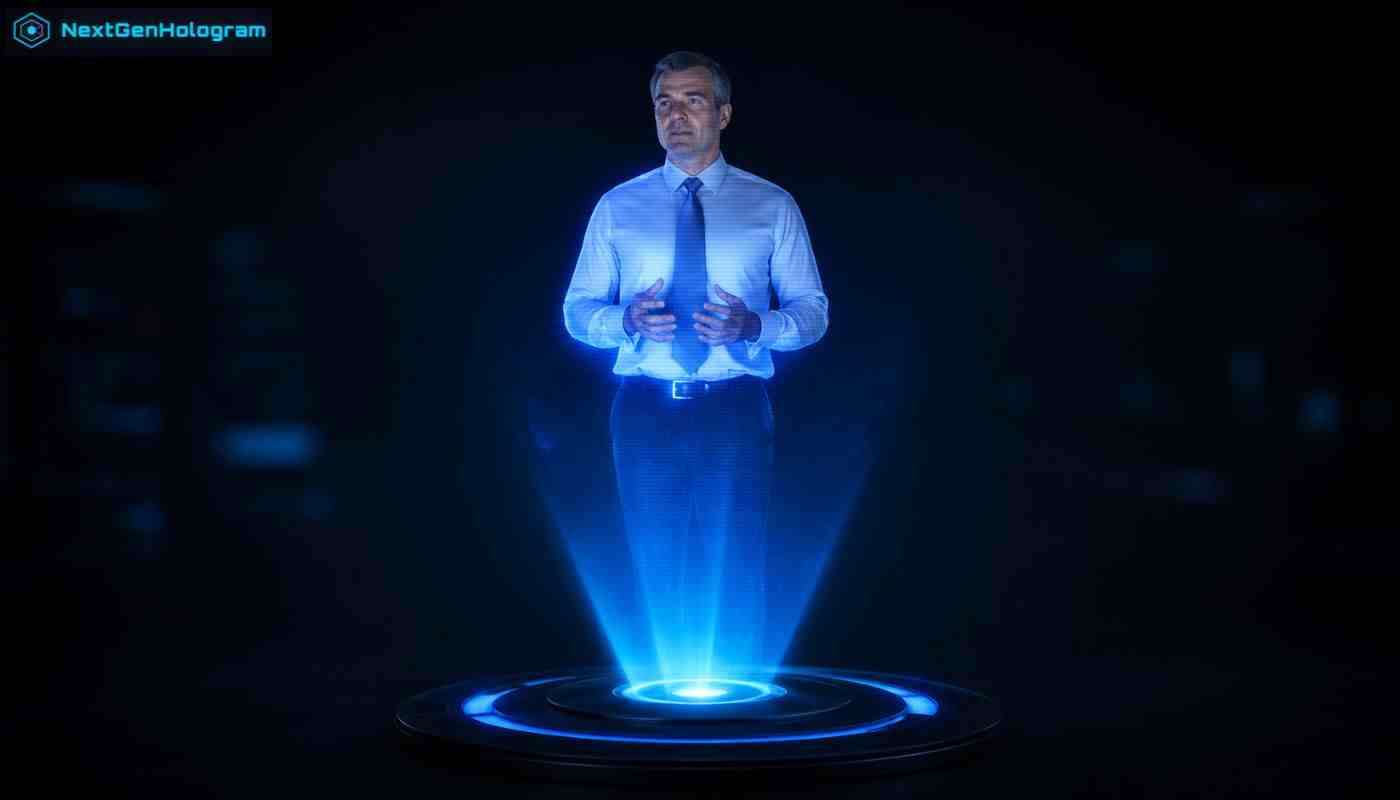
Holographic projections are three-dimensional images that seem to float in space. The viewers get an impression of reality, that is, a sensation of depth and volume, but there is never the need for special glasses. Unlike flat-screen displays, they are visible from a multitude of angles, which makes them suitable for entertainment, product launches, or training. Understanding how a hologram works is an elegant blend of optics, wave interference, and digital display technology.
The Science Behind Holographic Projections
Holograms are composed of light waves instead of drawn shapes. When a laser beam strikes an object, it reflects off that object and spreads in all directions. Simultaneously, another part of the laser beam is diverted towards a recording medium, usually a photosensitive film or a digital sensor, to form a coherent recording beam.
The interaction between the scattered light beam (the object wave) and the reference wave produces an interference pattern in the form of numerous tiny lines and curves containing the amplitude and phase information of the light. If this pattern were illuminated later with the same type of light, it would result in the reconstitution of the original wavefront, such that a 3D image in space becomes distinguishable over time of the object. This idea is at the center stage of holographic display technology, much like a recording and replaying of light is done in order to create an authentic 3D image.
How Modern Holography Works?
The current-day holographic setups have moved further from using conventional film-based holograms to the employment of digitally based methods that involve lasers, lenses, and see-through surfaces to produce outstanding results through stark and sharp images. The set‐ups may include:
Glass type displays: The image projected onto the transparent glass or foil perpendicular to the viewing direction is reflected at 45 degrees, giving a whereby impression of being embedded straight in front.
Volumetric displays: A spinning or layered medium (polymer display, or rotating screen, or glass cube) is lit up slice-by-slice by special projectors or LEDs, transforming it into a three-dimensional image.
Laser-based systems: The beam scans a controlled laser through a fog-like or aerosol space, revealing a brief glowing trace hinting a 3D figure.
In all of these, the system has to tweak how the light reaches viewers so that seeing the different parts of the picture from different angles gives the object the illusion of having depth.
Applications of Holographic Projections
Presently, there are some novel applications of holographic projection:
-
Education and training: Medical schools and engineering programs use identical holographic displays to present 3D imagery of the human anatomy or complex machinery.
-
In retail and events: Retailers and event hosts engage the service of holograms that showcase their products in 3D at trade shows or showrooms.
-
Entertainment: the music and art of concerts and theme parks have witnessed virtual performers or floating holograms that seem to have life.
-
Telepresence and collaboration: Using portable hologram display systems, some companies allow remote workers to appear as full‑sized 3D avatars during virtual meetings.
All these applications hinge on the relevant hardware, accurate optics, and responsive software, ensuring the image is aligned with the observer’s perspective.
Why Holographic Projections Are Gaining Popularity?
With improvements in technology, holographic display allows holographic projection to become very detailed, bright, and efficient. The availability of portable hologram displays and lightweight devices, along with cloud‑based software, dispenses this functionality across types of events and retail locations without worrying about intricate IT requirements.
As holographic projection services become more affordable and adapt to new possibilities, holographic projections become popular for the purpose they actually serve rather than feed into the image of scientific‑fiction craft ‑ aiming eventually to deepen human understanding, shopping experience, or to become a medium of multimedia.